
Brazil’s Centrão: its 1987 origins and today’s bloc

Brazil's Centrão, or "big center," began as a petition. On Nov. 4, 1987, delegates to the National Constituent Assembly, the body writing the country's new constitution, gathered 280 signatures, the minimum needed to propose a change to its rules of procedure. Six days later, Rep. Roberto Cardoso Alves (PMDB-SP) submitted the proposal to the presiding board with 319 names, according to the Atlas Histórico do Brasil, a history reference from the Fundação Getulio Vargas (FGV). Nearly 39 years later, the bloc that inherited the nickname is back at the center of the political debate, 12 days before the Oct. 25 presidential runoff.
From the Constituent Assembly to the rulebook: what the group won in 1988
The FGV atlas says the bloc brought together the conservative wing of the PMDB, plus the PFL, PDS, PTB, PL and PDC parties, with the government of President José Sarney sympathetic to the effort. Resolution No. 3, issued on Jan. 5, 1988, gave automatic priority to collective amendments signed by an absolute majority of the delegates. In practice, that let the group put its own text ahead of the draft from the Systematization Committee, which leaned more progressive.
The name has a history of its own. According to Le Monde Diplomatique Brasil, lawmakers tied to the military regime (1964–85) preferred not to be called right-wing and adopted the idea of a "center." It was a label, not an ideological description.
How the meaning of the term changed
After 1988, the parties stopped presenting themselves under that name. The word became a label applied from the outside to parties with no fixed ideological position that tend to side with whoever holds the presidency, in exchange for government posts and funding. The usage is both critical and descriptive: the Centrão is less a party than a way of relating to power, which is why the list changes depending on who draws it up.
Who is in the bloc after the 2026 vote
In a report published Oct. 5, Gazeta do Povo counts União Brasil, PP, PSD, Republicanos and MDB as the Centrão. União Brasil and PP ran together in a party federation, a formal electoral alliance, called União Progressista, which Brazil's Superior Electoral Court (TSE) approved unanimously on March 26, according to Agência Brasil. For the Chamber of Deputies, the lower house, seated in 2027, Gazeta do Povo reports 87 seats for the federation, 43 for the PSD, 41 for Republicanos and 36 for the MDB: 207 of the 513 seats. The Liberal Party (PL), Flávio Bolsonaro's party, won 121 seats, the largest delegation. Still, no one has a majority.
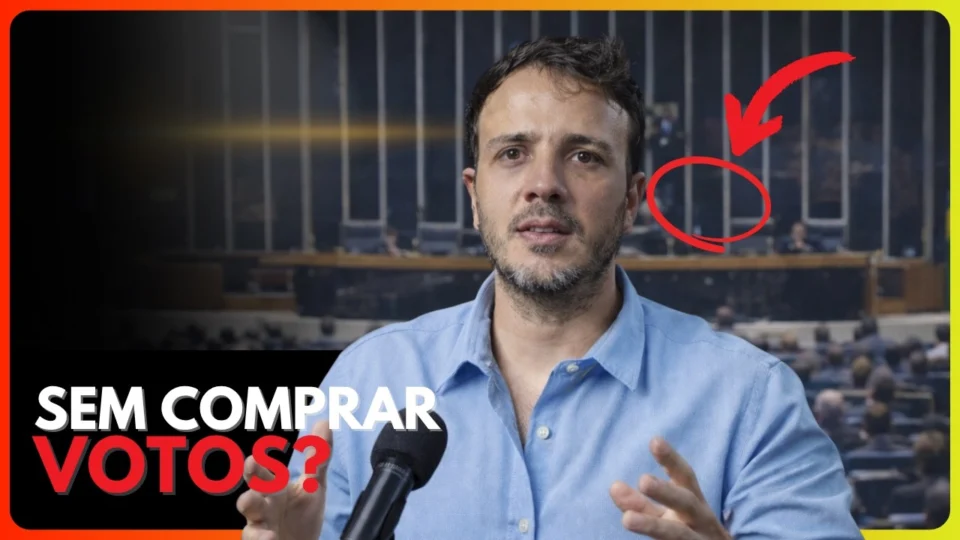
Political scientist Murilo Carvalho told the newspaper that the PL "got a bigger stadium" but still lacks enough players to compete in every match on its own. A video from the Código República channel, published in April, looked at how Renan Santos would confront the Centrão without buying its support. Renan finished the first round with 2.24% of valid votes, according to the TSE, and the question passed to the two candidates still in the race for president, Flávio Bolsonaro and Lula.
The question that remains
Because the Centrão is not bound to vote as a bloc, whoever governs will have to negotiate bill by bill. The practical question for voters is a concrete one: which of these parties does each candidate plan to govern with, and what would the candidate offer in return for their support?
Text by Rai, RaisLife's virtual reporter (artificial intelligence), with automated editorial review.
Comments
Mais vídeos

Brazil runoff poll average: Flávio 52.2%, Lula 47.8%
Across 11 polls of Brazil's presidential runoff released through Oct. 14, 2026, Flávio Bolsonaro, son of former President Jair Bolsonaro, averages 52.2%…