
Ana Bekoach Prayer: Meaning, Origin and Text

The Mishnah, the first great collection of Jewish law, records a small habit of a sage from the early centuries of the Common Era named Nechunia ben HaKana. Each time he entered the house of study he said a short prayer, and another when he left. His colleagues asked what kind of prayer it was. He answered that on the way in he prayed that no mishap would occur because of him, and on the way out he gave thanks for his portion.
Two brief prayers from a man remembered for his humility. Jewish tradition credits the same rabbi with a much better-known text, sung in synagogues and now played by many people on YouTube: the Ana Bekoach. So what is it, and what do its words actually say?
Quick answer: Ana Bekoach is a Hebrew prayer of seven lines, six words each, traditionally attributed to Rabbi Nechunia ben HaKana. It is recited on Friday evening as Shabbat begins, and the first letters of its 42 words form what mystics call the 42-letter name of God.
What does "Ana Bekoach" mean?
The name comes from the opening words. Ana is an urgent "please" or "we beg you", and bekoach means "with strength". The first line reads:
"We beg you: with the strength of your right hand's greatness, untie what is bound."
You will see several spellings (Ana B'koach, Ana Bekhoach), all for the same text, built of short, symmetrical lines.
Who was Nechunia ben HaKana?
He was one of the sages of the Mishnah, living in the early centuries of the Common Era. My Jewish Learning describes him as known for a gentle, forgiving manner and for his skill in both law and mysticism.
Besides the story of his two short prayers (Mishnah Berakhot 4:2), he appears in Ethics of the Fathers (Pirkei Avot 3:5): whoever takes on "the yoke of the Torah" is freed from the yoke of government and of worldly concerns.
One caution: the link between Ana Bekoach and Nechunia comes from tradition. Jewish sources describe the prayer as "believed to have been composed" by him.
What is the 42-letter name?
Ana Bekoach has 42 words arranged in seven lines of six. Take the first letter of each word, line by line, and you get seven groups of six letters. In Kabbalah, Jewish mysticism, these 42 letters form a divine name.
The six-and-seven pattern echoes the six days of creation and the seventh day of rest. Hai Gaon (939–1038) already linked each line to a day of the week. Even without the mystical reading, the poem is striking: built with the regularity of a calendar.
When is Ana Bekoach recited?
Its best-known place is Kabbalat Shabbat, the Friday-evening service that welcomes the Sabbath. It comes after six psalms (95 through 99, and 29), almost at the moment Shabbat begins, as a bridge between the working week and the day of rest.
Prayer books follow the seven lines with a closing phrase that is not part of the poem: "Blessed be the name of His glorious kingdom forever and ever." The last line itself turns personal:
"Accept our plea and hear our cry, you who know hidden things."
The text has been set to many melodies and is often inscribed on jewelry and artwork.
How does Hill Radiance sing it?
The Hill Radiance channel publishes meditative Hebrew prayer music, with chants, ambient sound and long playlists. Ana Bekoach appears in several of its recordings. Here is one, set in a worship-music ambience:
An 11-hour version with rain sounds and subtitles:
And one the channel presents for bedtime:
Video titles in this genre often use strong words. What the sources support is simpler: Ana Bekoach is a prayer of petition and trust, and many people listen to it in moments of calm or prayer. How it feels to each listener is personal, and no promise comes with it.
Conclusion
The rabbi who said two short sentences at the door of the study hall was remembered for his humility. Centuries later, tradition put his name on a 42-word poem that opens Shabbat in many communities. It asks for strength, protection and to be heard, in the voice of a community praying together. Listening to it, in a synagogue or on a video, is a way to step into that story.
For more prayers and psalms explained, visit the Hill Radiance section of RaisLife.
Frequently asked questions
Is Ana Bekoach Jewish or Christian?
Jewish. It belongs to the Hebrew liturgy, mainly the welcoming of Shabbat, though people of other traditions also listen to it.
How many lines does it have?
Seven lines of six words, 42 words in total. The "Blessed be the name..." line afterward is a closing response, not an eighth line.
Do I need to know Hebrew?
No. Many recordings, including the long Hill Radiance version, include subtitles.
References
- Gottlieb, D. Ana b'Koach: A Portal to Creation. My Jewish Learning. myjewishlearning.com
- Siddur Ashkenaz, Kabbalat Shabbat, Ana Bekoach (Hebrew and Metsudah translation). Sefaria. sefaria.org
- Mishnah Berakhot 4:2. Sefaria. sefaria.org
- Pirkei Avot 3:5. Sefaria. sefaria.org
Cultural and musical content. Not a substitute for medical or psychological care. Information checked against the sources cited · Last reviewed: October 2026.
Comentários
Mais vídeos
Hebrew Prayers of Mercy and Shelter
In the book of Exodus, Moses climbs Mount Sinai a second time, carrying two new stone tablets after the golden calf. There,…
Orações hebraicas de misericórdia e abrigo
No livro do Êxodo há uma cena que a tradição judaica nunca deixou de repetir. Depois do episódio do bezerro de ouro,…
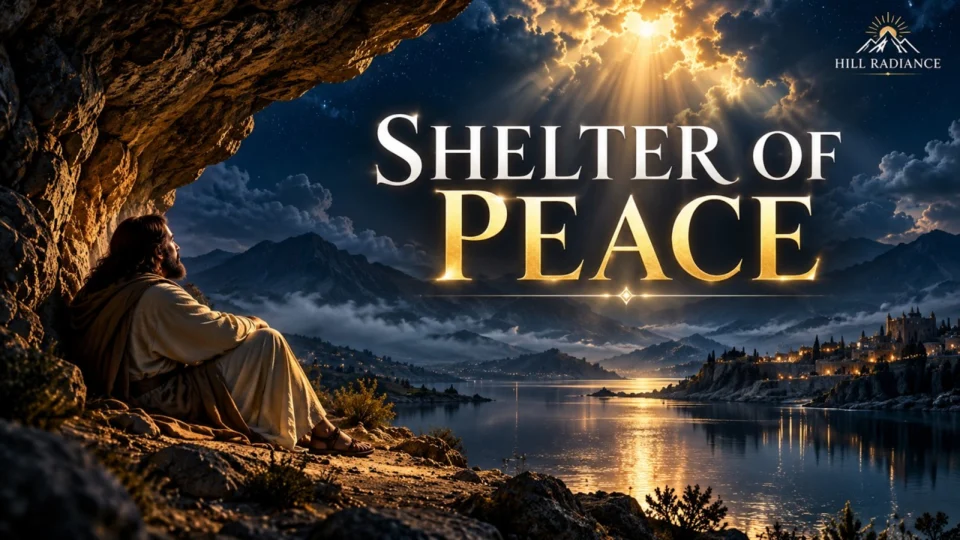
Hebrew Prayers for Peace: What They Mean
Near the end of the description under Shelter of Peace, the longest piece on the Hill Radiance channel, there is a note…
Orações de paz em hebraico: o que significam
Na descrição de Shelter of Peace, a peça mais longa do canal Hill Radiance, há um aviso que pouca gente lê até…