

Psalm 121 in Hebrew: Text, Meaning and Origin

In the ancient Temple in Jerusalem, a flight of fifteen steps led from the Women's Courtyard up to the Courtyard of Israel. The Mishnah, the code of Jewish oral law completed around the year 200, says those steps matched the fifteen "Songs of Ascents" in the Book of Psalms, and that the Levites, the Temple musicians, sang on them.
The same text describes one of those nights during the festival of Sukkot: torches burning, people dancing in the courtyard, trumpets sounding, and the Levites on the steps with harps, lyres and cymbals.
One of those fifteen songs is Psalm 121, the one that opens with someone lifting their eyes to the hills. More than two thousand years later it is still sung in Hebrew. What does each verse say, and where does the word "ascent" come from?
Quick answer: Psalm 121 is one of the fifteen "Songs of Ascents" (Psalms 120 to 134), poems linked to pilgrims going up to Jerusalem. In Hebrew it opens with Shir lamaalot, "a song for the ascents", and asks where the speaker's help will come from.
What does "Song of Ascents" mean?
The Hebrew title is Shir HaMaalot; maalot means "ascents" or "steps". There are two main explanations. The best known ties the songs to pilgrimage: three times a year, at Passover, Shavuot and Sukkot, families travelled to Jerusalem, a city set high in the Judean hills, so arriving meant climbing. That is why these psalms are often read as songs for the road; the footnote in the US bishops' Bible calls Psalm 121 a blessing for someone setting out on a journey.
The second is the Mishnah's: the fifteen Temple steps and the Levites singing on them. The two explanations can coexist.
Psalm 121 in Hebrew, verse by verse
The Hebrew below follows the Sefaria edition, each verse with a short, free translation.
- 1. שִׁיר לַמַּעֲלוֹת אֶשָּׂא עֵינַי אֶל־הֶהָרִים מֵאַיִן יָבֹא עֶזְרִי: "A song for the ascents. I lift my eyes to the hills: where will my help come from?"
- 2. עֶזְרִי מֵעִם יְהוָה עֹשֵׂה שָׁמַיִם וָאָרֶץ: "My help comes from the Lord, maker of heaven and earth."
- 3. אַל־יִתֵּן לַמּוֹט רַגְלֶךָ אַל־יָנוּם שֹׁמְרֶךָ: "He will not let your foot slip; your keeper does not slumber."
- 4. הִנֵּה לֹא־יָנוּם וְלֹא יִישָׁן שׁוֹמֵר יִשְׂרָאֵל: "The keeper of Israel neither slumbers nor sleeps."
- 5. יְהוָה שֹׁמְרֶךָ יְהוָה צִלְּךָ עַל־יַד יְמִינֶךָ: "The Lord is your keeper, your shade at your right hand."
- 6. יוֹמָם הַשֶּׁמֶשׁ לֹא־יַכֶּכָּה וְיָרֵחַ בַּלָּיְלָה: "The sun will not strike you by day, nor the moon by night."
- 7. יְהוָה יִשְׁמָרְךָ מִכָּל־רָע יִשְׁמֹר אֶת־נַפְשֶׁךָ: "The Lord will keep you from all harm; he will keep your life."
- 8. יְהוָה יִשְׁמָר־צֵאתְךָ וּבוֹאֶךָ מֵעַתָּה וְעַד־עוֹלָם: "The Lord will keep your going out and your coming in, now and forever."
Two details only show in the original. The title reads shir lamaalot, "a song for the ascents", while the other fourteen say shir hamaalot, "a song of the ascents". And the root sh-m-r, "to keep", appears six times in eight verses, so a sung Hebrew version keeps returning to it like a refrain.
Who wrote Psalm 121?
Nobody knows. Many psalms carry "of David" in their heading; this one names no author. The first verse speaks as "I", and from verse 3 another voice answers as "you", which is why some read it as a dialogue: the traveller asks, and someone else answers.
Where is Psalm 121 read today?
In Jewish life, psalms are recited at the bedside of the sick, at funerals and when visiting a grave. In Christianity it came with the rest of the Psalter; in Greek and Latin numbering it is Psalm 120, and the Vatican's Nova Vulgata lists it as Psalm 121 (120), "Canticum ascensionum". Mendelssohn set it in the trio "Hebe deine Augen auf" ("Lift thine eyes") of his oratorio Elijah, first performed in 1846.
How does Hill Radiance sing Psalm 121?
The Hill Radiance channel sings the psalms in the original Hebrew, slowly, with the words on screen, which helps anyone following the pronunciation. The first video centres on verse 2, "my help comes from the Lord":
The second focuses on the keeper who does not sleep, verses 3 to 5:
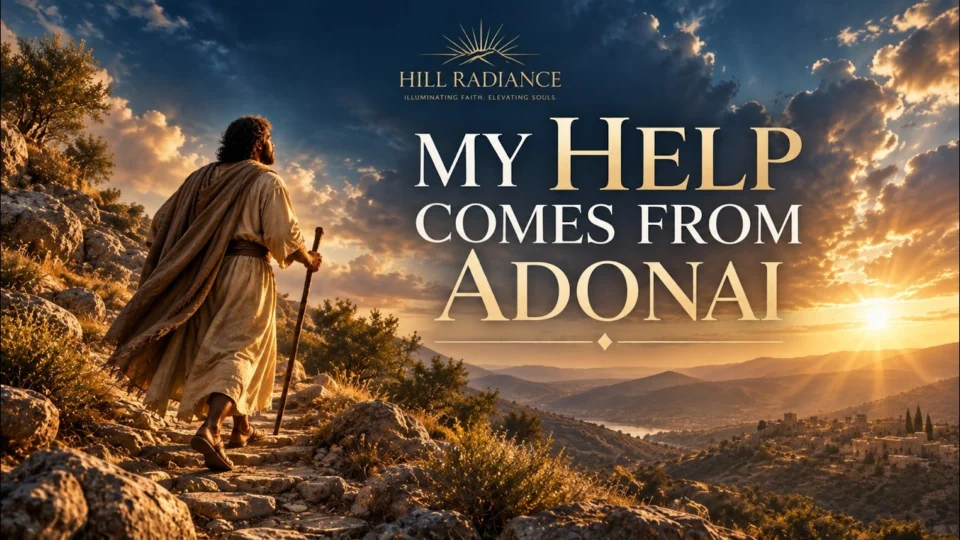
Many people listen to recordings like these during quiet moments or prayer, or to learn biblical Hebrew by ear.
Conclusion: a song made for the road
The Levites sang on the fifteen steps; pilgrims sang on the road up to Jerusalem. Psalm 121 belongs to that movement: someone looks at the hills still ahead and asks a simple question, answered in eight short verses that keep repeating one word. Hearing it in Hebrew brings you close to the sound those steps once knew.
Frequently asked questions
How do you pronounce the opening of Psalm 121?
A simple transliteration: Shir lamaalot, esa einai el heharim, me'ayin yavo ezri.
Why is it Psalm 120 in some Bibles?
Bibles following the Greek and Latin numbering count it as 120.
How many Songs of Ascents are there?
Fifteen, Psalms 120 to 134.
References
- Sefaria. Psalms 121, Hebrew text and translation. sefaria.org/Psalms.121
- Sefaria. Mishnah Middot 2:5. sefaria.org/Mishnah_Middot.2.5
- Sefaria. Mishnah Sukkah 5:4. sefaria.org/Mishnah_Sukkah.5.4
- My Jewish Learning. Psalms. myjewishlearning.com
- USCCB. Psalm 121, text and notes (New American Bible). bible.usccb.org
- Vatican. Nova Vulgata, Liber Psalmorum. vatican.va
- IMSLP. Mendelssohn, Elijah, Op. 70. imslp.org
More psalms sung in Hebrew in the Hill Radiance section.
Cultural and musical content. It does not replace medical or psychological care. Information checked against the sources cited · Last reviewed: October 2026.
Comentários
Mais vídeos

Hebrew Prayers of Mercy and Shelter
In the book of Exodus, Moses climbs Mount Sinai a second time, carrying two new stone tablets after the golden calf. There,…
Orações hebraicas de misericórdia e abrigo
No livro do Êxodo há uma cena que a tradição judaica nunca deixou de repetir. Depois do episódio do bezerro de ouro,…

Hebrew Prayers for Peace: What They Mean
Near the end of the description under Shelter of Peace, the longest piece on the Hill Radiance channel, there is a note…
Orações de paz em hebraico: o que significam
Na descrição de Shelter of Peace, a peça mais longa do canal Hill Radiance, há um aviso que pouca gente lê até…